Boxes Everywhere and No Idea What's in Them? How to Label Moving Boxes So Unpacking Is Easy
October 31, 2026
Quick Answer: The best way to label moving boxes is to write the destination room, a short description, and a box number on the top and at least two sides of every box, then add a strip of colored tape that matches a color key for each room in the new home. Keep a simple master list that pairs each number with its contents, and mark one or two boxes "Open First" for the things you will need on night one, like bedding, chargers, toiletries, and basic tools. Label as you pack, not afterward, and label for the room the box is going to, not the room it came from. A system like this lets your crew drop every box in the right spot without asking you a single question.
It's 10:45 on the first night in the new house. You're standing in a hallway lined with boxes, hunting for a phone charger, and every box within reach says one of three things: "STUFF," "MISC," or something in handwriting that looks like it was done on a moving truck. You open six boxes before you find a towel. The charger turns up the next afternoon, under a stack of picture frames, in a box marked "Office."
Most unpacking misery has nothing to do with how many boxes you own. It comes from labels that made sense to you at 9 p.m. on packing day and mean nothing to anyone, including you, two weeks later. A good labeling system costs a couple of rolls of tape and a handful of markers, and it pays you back every time a box lands in the right room on the first try. Here's how to build one that holds up from the first box you tape to the last one you break down.
Label the Destination, Not the Room It Came From
This is the single biggest shift in how to think about box labels. When you pack your bedroom closet, your instinct is to write "Bedroom" on the box. But the crew unloading at the other end doesn't care where the box lived. They need to know where it's going.
Most of the time those are the same room. Kitchen items go to the kitchen, bathroom items go to a bathroom. But moves rarely map one to one. The den becomes a home office. Two kids who had separate bedrooms now share one. The formal dining room turns into a playroom, and the extra bedroom you used for storage becomes a guest room. If you label by origin, a box marked "Den" shows up in the new den, which might now be the sewing room, and somebody has to carry it again.
Decide The Floor Plan First
Before sealing boxes, decide how each room will be used and write it down. Clear room purposes prevent dumping grounds during moving day.
Name Rooms The Way Your Crew Will Read Them
Write full room names like Primary Bedroom, Hall Bath, Garage, and Laundry Room. Avoid abbreviations, which can create confusion and send boxes elsewhere.
Add A Floor If You Have Stairs
For two story homes, label boxes with their destination floor. Writing Upstairs Bedroom 2 can prevent unnecessary trips while carrying heavy boxes.
Pick One System Before You Tape Anything
There are three popular ways to label boxes: by room name, by color, and by number. Any one of them works on its own for a small apartment. For a whole house, you'll get the best results from layering two or three, because each one covers for the weak spot in the others.
Room Names Are The Foundation
Room names give everyone clear information without requiring a key. Write destinations prominently in large letters, or use printed labels when handwriting isn't easily readable.
Color Makes It Fast
Use one distinct tape or sticker color per destination room. Choose clearly different colors, and combine colors or add letters when there are many rooms.
There's One Catch Worth Planning For
Some family members or movers may be colorblind, making color alone unreliable. Always include the room name in words as your dependable backup signal.
Numbers Make It Trackable
Number boxes within each room, such as Kitchen 1, Kitchen 2, and Kitchen 3. Numbers help inventory shipments and locate specific boxes easily.
A Combined System, In Practice
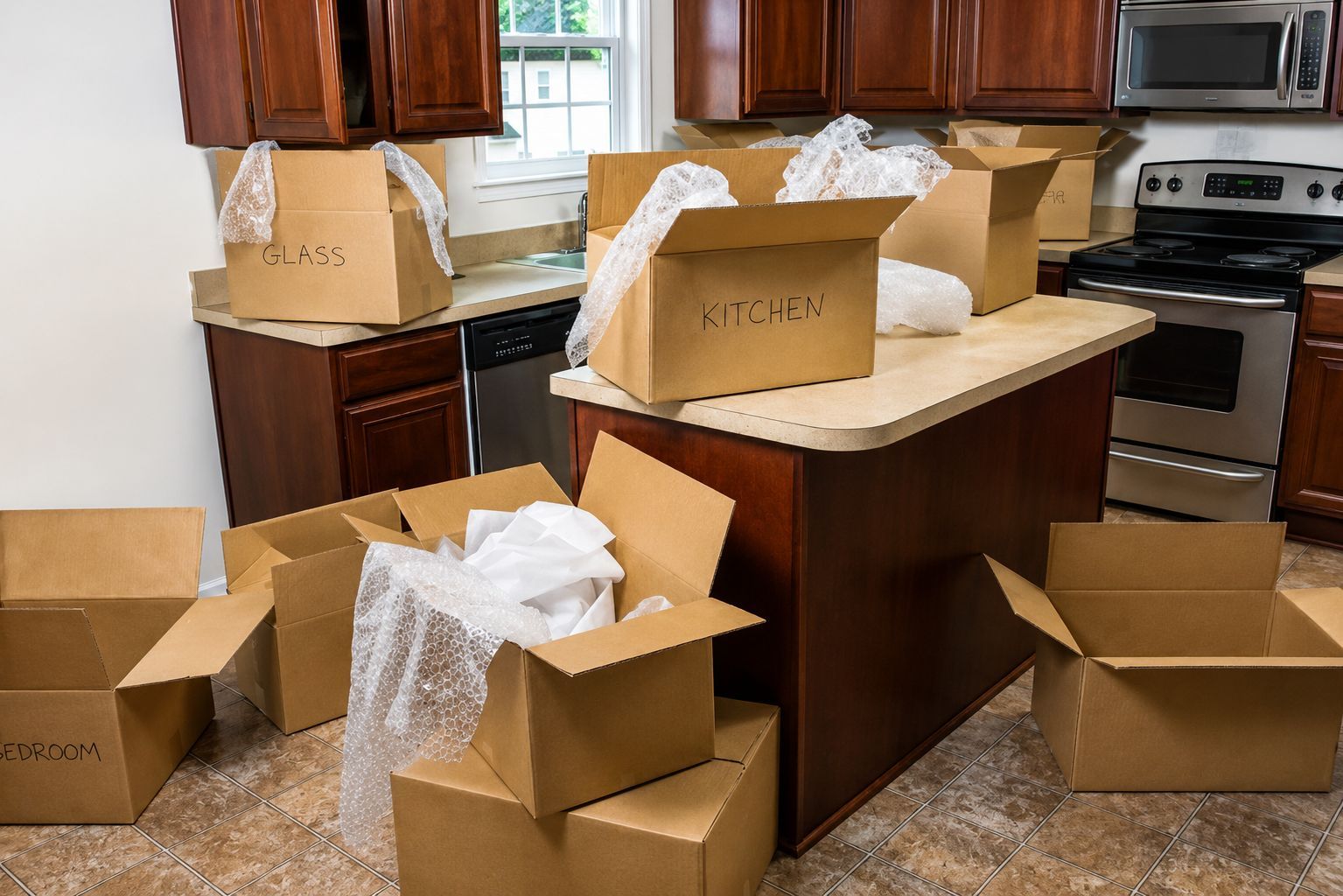
Label a box KITCHEN 4, add green tape, and mark Heavy underneath. Keep a master list identifying its contents, giving everyone useful information.
What Belongs on Every Label (and Where It Goes)
Labels fail in two ways. They either say too little ("Misc") or so much that nobody can read them from three feet away. The goal is a label you can read in about two seconds while carrying something heavy.
The Four Things To Include
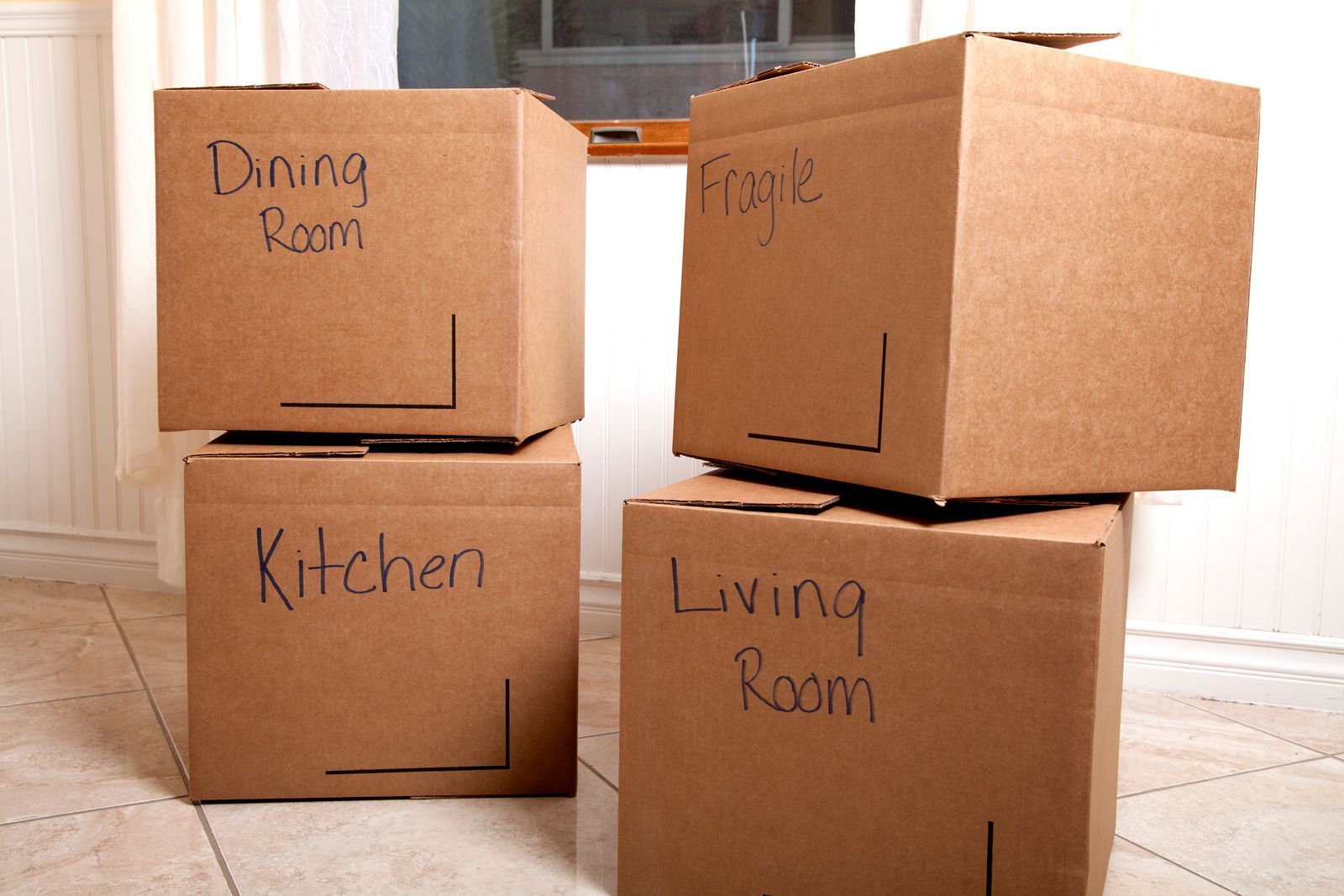
Include the destination room, main contents, box number, and handling note. Simple labels like Kitchen 4, Pots and Pans, Heavy provide enough information.
Handling Notes Carry Real Weight
Words like Fragile, This Side Up, and Heavy affect lifting and stacking. Put fragile warnings on multiple sides so movers can see them.
Label The Top And At Least Two Sides
Label the room and number on the top and two adjacent sides. This keeps information visible when boxes are stacked during moving.
Don't Label The Bottom Or The Flaps
Tape boxes closed before labeling. Write on the cardboard walls instead of flaps, because flaps get opened and labels disappear during unpacking.
TIP: Seal the box first, then write on it. A label on a half packed box can end up on a surface that gets folded, cut, or covered by tape. If you use paper labels, press a strip of clear packing tape over them so the edges don't curl.
Make Labels Survive The Garage
Hot summer garages can loosen cheap tape and peel paper labels. Use permanent markers or strong labels, and cover them with clear tape for protection.
Keep a Master List You Will Actually Use
A numbered list turns a pile of boxes into something you can check. It doesn't have to be fancy. A notebook, a note on your phone, or a spreadsheet all work, as long as you update it while you pack and not afterward.
What The List Looks Like
Write one line per box with its number, room, and brief contents. This lets you locate specific items quickly without opening or searching through multiple boxes.
Why It's Worth The Five Minutes Per Room
A room-by-room list helps count boxes during unloading and identify missing items immediately. It also lets you answer questions about contents without opening boxes.
Put The List In Two Places
Keep the inventory on your phone and as a paper copy in your essentials bag. Phones can die, especially during the first night.
Color The List Too
If using color coding, match each list section to its box color. This makes counting boxes by room faster when unloading and organizing.
Set Aside the Open First Boxes
Every move has a moment, usually around dinner on the first day, when you realize you can't find the one thing you need. An "Open First" box prevents it.
What Goes In It
Think about the first twenty four hours. Pack towels, toiletries, bedding, chargers, paper plates, cups, coffee supplies, basic tools, trash bags, medications, and essentials for children or pets.
How To Mark It
Write OPEN FIRST on every side in large letters, with a short contents list on top. Use distinctive tape or a star, and carry these boxes yourself when possible.
WARNING: Keep medications, important documents, jewelry, and anything irreplaceable out of the boxes that ride on the truck. Carry them with you in a bag or a small tote that never leaves your sight.
Give The Bathroom Its Own Box
Pack towels, soap, toilet paper, and a shower curtain together. Label the box on three sides and load it last so bathroom essentials are immediately available.
Pack in a Way That Makes Labeling Work
A label can only be as accurate as the box it's stuck to. If a box holds items from three rooms, no label will fix that.
One Room Per Box
Keep each box assigned to one room. When it fills, use paper or towels as filler, or close it rather than mixing destinations.
Heavy Things In Small Boxes
Pack books, canned goods, tools, and dishes in small boxes. Use larger boxes for pillows, linens, and lampshades to keep weights manageable.
Mark What You've Got To Protect
Fragile items need padding, clear warnings on multiple sides, and directional labels. Pack boxes securely enough that contents cannot shift during handling.
Write The Label After You Pack, Not Before
Pre-labeling rooms is fine, but wait before adding detailed contents. Plans change, and inaccurate labels create confusion when boxes contain unexpected items.
Get the New House Ready Before the Truck Arrives
Labels do half the work. The other half happens at the new home, where your crew needs to know what the colors and names mean.
Post A Color Key At Every Entrance
Create a simple sheet showing each color and its assigned room. Post copies at the front door, garage, and stairways so movers can check destinations quickly.
Put Matching Signs On Every Door
Place each room's color or name on its doorway. Use secure tape so signs stay visible throughout moving day, while protecting painted walls and trim.
Walk The Crew Through The House
Before unloading begins, briefly show movers the floor plan, room signs, and color key. Mention restricted rooms, unusual instructions, or spaces that should remain empty.
When It Makes Sense to Hand the Labeling to Someone Else
A labeling system isn't hard, but it takes steady attention over days of packing, and that's the part many people can't spare. If you're working long hours, helping an older parent downsize, or managing kids, a professional crew can do the packing, number every box, and hand you a list when the job is done. The boxes arrive consistent, with the same terms, the same handwriting, and the same layout, and unpacking becomes a matter of opening the right box in the right room.
Even if you pack yourself, you can have a crew finish the fragile rooms. Kitchens, glassware, and artwork take the most time to pack and the most care to label, so many people hand off those rooms and handle the closets and bedrooms on their own. If you go this route, tell the crew your color key and your room names, and they'll label to match.
Frequently Asked Questions
What's the best way to label moving boxes?
Use layers. Write the destination room, a short description, and a number on the top and two sides, add matching colored tape, and keep a master list pairing numbers with contents.
Should I label the top or the sides of a moving box?
Both, but the sides matter most. Stacking hides the lid of every box except the top one, so label the top and two adjacent sides for visibility.
Is color coding moving boxes worth the effort?
Yes, especially in a larger house. Colored tape can be read from across a room and speeds unloading. Add the room name in words as a backup for colorblind helpers.
How detailed should the labels be?
Keep them short: the room, two or three words about the contents, a number, and a handling note like Fragile or Heavy. Put detailed contents on your master list instead.
What should go in an Open First box?
Pack what you need in the first twenty four hours: bedding, towels, toiletries, chargers, a few plates and cups, basic tools, trash bags, medications, and pet or kid essentials.
Do professional movers actually use box labels?
Every crew relies on them. Labels show which room gets each box, which boxes are fragile, and what goes on the bottom of a stack, which means fewer questions and a faster unload.
Labeled Boxes Turn Moving Day Into Easy Unpacking
A good labeling system comes down to a few habits. Write the destination room, a short description, and a box number on the top and two sides of every box, then add a strip of colored tape that matches a posted color key. A master list pairs each number with its contents, and one or two Open First boxes cover the essentials for night one. Labeling as you pack keeps the details accurate, so the crew knows where every box belongs.
Homeowners in Meridian, ID, who would rather not handle the
packing
alone can turn to Electric Monkey Moving, a crew with 6
years of experience in local moves, packing, and unpacking. A team that numbers every box and keeps a clear list makes the first week in a new house far calmer. When each box lands in the right room on the first try, the house starts feeling like home within days instead of weeks.